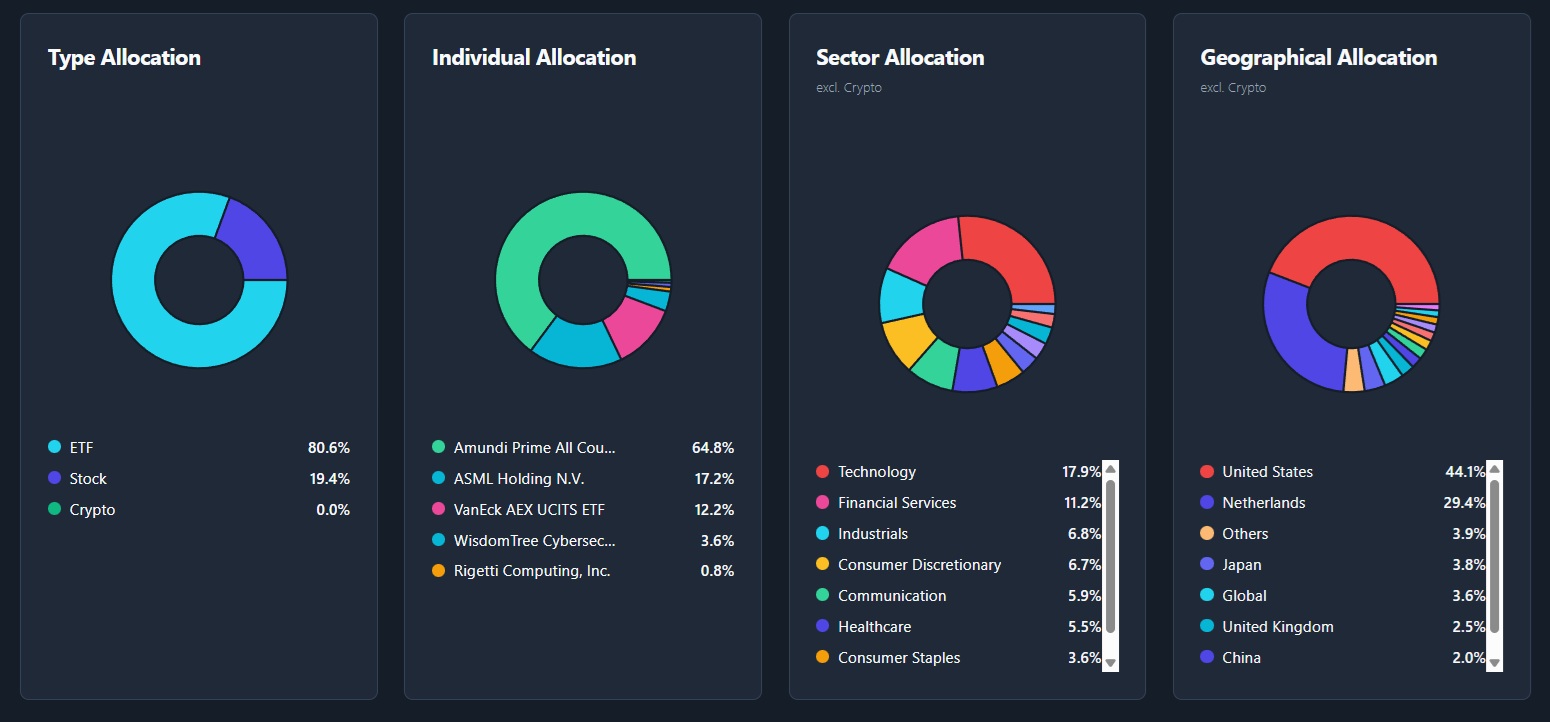
You’ve got money in a savings account, maybe some ETFs, a crypto wallet, and a pension somewhere in the background. But when you try to answer one simple question—“What’s my net worth?”—you end up juggling apps, spreadsheets, and guesswork. That’s exactly where understanding How to Track Your Net Worth Automatically becomes a game-changer.
What it actually means
At its core, net worth is a simple formula:
Net worth = assets – liabilities
Assets are everything you own with value, like cash, investments, or property. Liabilities are everything you owe, such as loans, credit cards, or a mortgage.
So, How to Track Your Net Worth Automatically means using a system that continuously updates this calculation for you without manual input. Instead of logging into five different platforms, a net worth tracker pulls everything into one place and updates your numbers in real time or at regular intervals.
A good setup usually includes:
A personal finance dashboard that shows your full financial picture in one view.
Automatic syncing or easy updating of accounts like brokerage, crypto, and savings.
Clear breakdowns so you can track assets and liabilities separately.
The goal isn’t complexity—it’s clarity without effort.
Why it matters more than you think
Most beginner investors focus on returns: “Did my portfolio go up this month?” That’s useful, but incomplete.
Your net worth tells a deeper story.
It captures:
How your investments perform.
How your debts evolve.
Whether your overall financial position is improving.
Without this, you can make misleading decisions. For example, your investments might be growing, but if your debt grows faster, your financial position is actually worsening.
When you automate net worth tracking, you remove friction. That means you check your finances more often, spot problems earlier, and make better decisions over time.
Think of it like a fitness tracker—but for your money. If you only check once a year, you miss the trends that matter.
Manual vs automated tracking
Many people start with spreadsheets. It works—but only up to a point.
Manual tracking typically looks like this:
Logging into each account separately.
Updating balances by hand.
Forgetting to update for weeks (or months).
Making decisions based on outdated data.
Automated tracking changes that dynamic completely.
With a net worth app or tool:
Data updates regularly without your input.
You reduce human error.
You actually stick with the habit because it’s easy.
The biggest difference isn’t just convenience—it’s consistency. And consistency is what makes financial tracking useful.
Common mistakes to avoid
Even with the right tools, people often get net worth tracking wrong. Here are the most common pitfalls:
Ignoring liabilities. Many people only track investments and forget debts, which inflates their perceived wealth.
Updating too infrequently. A quarterly update isn’t enough to spot trends or issues early.
Overcomplicating the setup. Too many categories or manual tweaks can make you abandon the system.
Focusing only on short-term changes. Net worth fluctuates—what matters is the long-term direction.
Using multiple disconnected tools. Fragmentation defeats the purpose of a personal finance dashboard.
The solution is simple: keep everything in one place and let automation do the heavy lifting.
A practical example
Let’s make this concrete.
Imagine your financial situation looks like this:
Assets:
€10,000 in savings
€15,000 in ETFs
€5,000 in crypto
Total assets: €30,000
Liabilities:
€8,000 student loan
€2,000 credit card balance
Total liabilities: €10,000
Your net worth is:
€30,000 – €10,000 = €20,000
Now imagine your ETF portfolio grows by €1,000, but you also add €1,000 in new debt.
Your investments look better—but your net worth stays exactly the same.
This is why tracking everything together matters. A net worth tracker shows the full picture instantly, instead of giving you a false sense of progress.
When this process is automated, you don’t have to recalculate anything. You simply open your dashboard and see the truth.
How to apply this to your own portfolio
Getting started with How to Track Your Net Worth Automatically doesn’t require a complex setup. You just need a structured approach.
Start with these steps:
List all your assets: savings, investments, crypto, property.
List all your liabilities: loans, credit cards, mortgages.
Choose a single tool or system to consolidate everything.
Set a routine to review your net worth weekly or monthly.
Focus on trends, not daily fluctuations.
From there, the key upgrade is automation.
Instead of maintaining spreadsheets, use a tool that acts as your central hub. A personal finance dashboard gives you visibility without the manual effort.
For example, a tool like TrackinV can help with this by bringing different asset classes into one overview, so you can monitor your full portfolio without switching platforms.
The less friction you have, the more likely you are to stay consistent—and consistency is what drives results.
The bottom line
How to Track Your Net Worth Automatically isn’t about fancy tools—it’s about removing friction so you can see your real financial position clearly and consistently. When you combine assets and liabilities into one automated view, better decisions follow naturally.
Ready to see your actual portfolio performance?
Track it free at trackinv.com.