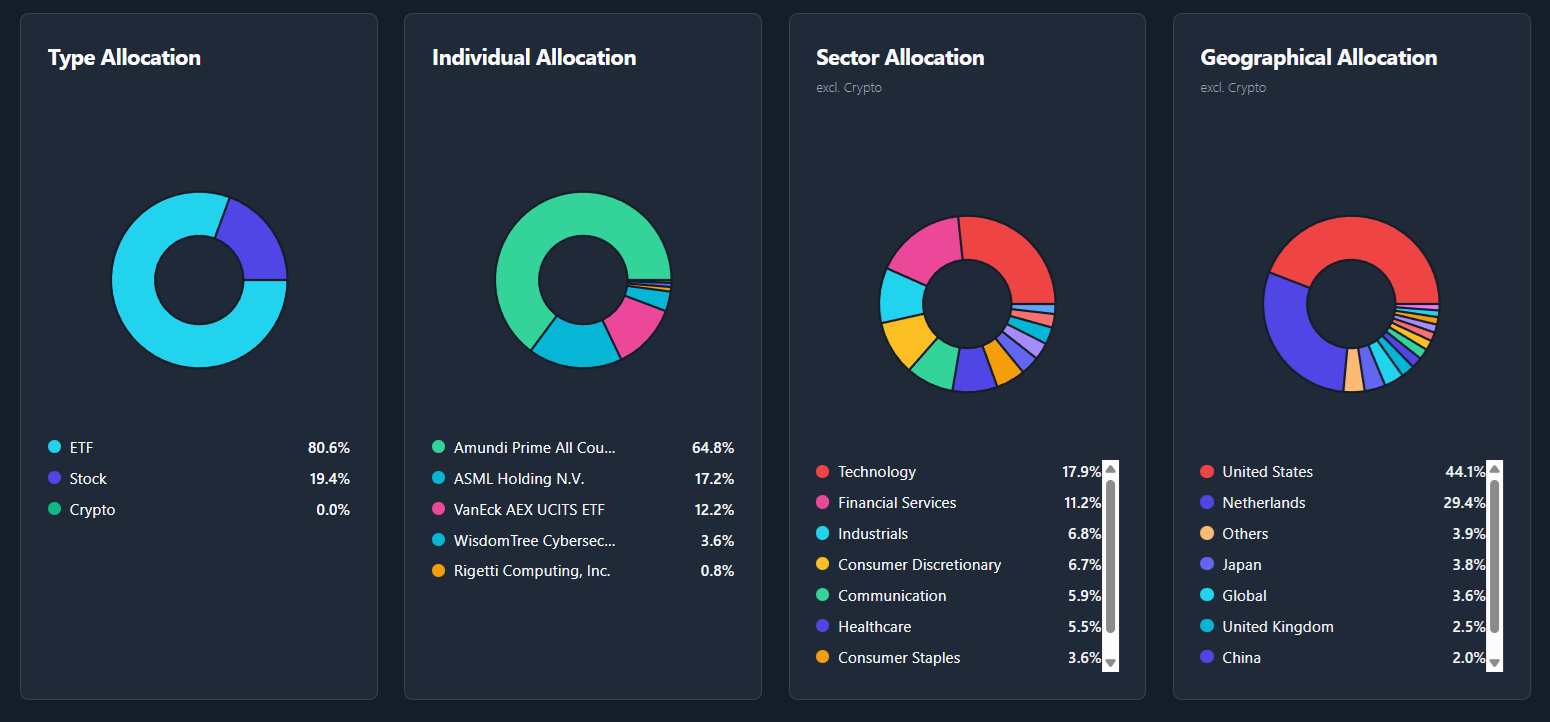
In today's intricate financial landscape, investors frequently diversify across a broad spectrum of asset classes. This strategy, while crucial for mitigating risk and optimizing returns, introduces significant complexities in tracking and managing various holdings.
A multi-asset portfolio tracker addresses this challenge directly. It offers a consolidated platform to monitor investments spanning equities, bonds, real estate, cryptocurrencies, and alternative assets. Such a tool is no longer a luxury but an indispensable component for any investor aiming for comprehensive financial oversight.
Consolidating Diverse Investment Holdings
Modern investment strategies often advocate for diversification across numerous asset classes. This approach helps to spread risk and potentially capture growth from different market segments.
However, manually tracking a portfolio comprising domestic stocks, international ETFs, corporate bonds, real estate funds, and digital assets like Bitcoin or Ethereum presents a considerable logistical challenge. Data often resides in disparate brokerage accounts, exchange wallets, and financial institutions.
A dedicated multi-asset portfolio tracker centralizes all this information. It aggregates data from multiple sources into a single, cohesive interface. This unification eliminates the need for tedious manual data collection and spreadsheet management.
According to a survey by Statista, approximately 60% of retail investors hold investments across at least three different asset classes. Managing these without a consolidated view can lead to inefficiencies and oversights, impacting overall portfolio performance and strategic decision-making.
Accurate Performance Measurement and Reporting
Understanding the true performance of a multi-asset portfolio requires more than just knowing individual asset returns. Investors need to calculate consolidated returns, factoring in capital gains, dividends, interest, and even foreign exchange fluctuations.
Manual computation of these metrics, especially across varied asset classes and currencies, is prone to error and highly time-consuming. A sophisticated tracker automates these calculations, providing precise, real-time performance insights.
This includes annualized returns, money-weighted returns, and time-weighted returns, crucial for comparing performance against benchmarks or other investment opportunities. The ability to generate accurate historical performance reports is also vital for regulatory compliance and personal financial analysis.
Furthermore, an advanced tracker often assists with tax reporting by categorizing income and gains appropriately. This streamlines the tax season process, reducing the burden on investors and their financial advisors.
Enhancing Risk Management and Strategic Allocation
Effective risk management and strategic asset allocation are pillars of successful long-term investing. A multi-asset portfolio tracker provides the necessary visual and analytical tools to maintain optimal portfolio construction.
It allows investors to see their current asset allocation at a glance, highlighting any over-concentration in specific sectors or asset classes. This visibility is critical for identifying potential risks, such as an unintended heavy weighting in a volatile market segment.
By comparing the actual allocation against target allocations, investors can make informed decisions about rebalancing their portfolio. This ensures alignment with their predefined risk tolerance and investment objectives.
For instance, if a portfolio drifts significantly from its target 60% equity, 40% bond allocation due to strong equity market performance, the tracker will highlight this deviation. This enables timely adjustments, preventing excessive risk exposure.
Expert financial analysts frequently emphasize the importance of continuous monitoring for effective risk mitigation. A multi-asset tracker empowers investors with the data necessary for such vigilance, reinforcing disciplined investment practices.
Streamlining Decision-Making and Operational Efficiency
Beyond tracking and reporting, a multi-asset portfolio tracker significantly enhances an investor's ability to make timely and informed decisions. By consolidating all relevant data, it provides a holistic view necessary for strategic planning.
The operational efficiencies gained are substantial. Automation of data aggregation, performance calculations, and reporting frees up valuable time. Investors can then dedicate more effort to market research, strategy development, and long-term financial planning, rather than administrative tasks.
For portfolio managers, the consolidated view across multiple client accounts offers an unparalleled advantage. It enables consistent oversight and facilitates proactive adjustments across their entire book of business. This professional utility is a key driver for adoption in wealth management firms.
In a dynamic market environment, rapid access to accurate, comprehensive portfolio data is a competitive advantage. It allows investors to react swiftly to market shifts or rebalance opportunistically, aligning with their overarching investment thesis.
Key Takeaways
A multi-asset portfolio tracker centralizes all investment data, simplifying oversight across diverse holdings.
It provides accurate, automated performance calculations for capital gains, income, and overall returns, aiding in tax reporting.
The tool is crucial for visualizing asset allocation, identifying risks, and facilitating strategic rebalancing to maintain investment objectives.
Ultimately, it enhances operational efficiency and empowers investors with the comprehensive insights needed for informed, timely decision-making.
Disclaimer: This article is for educational and informational purposes only. It does not constitute financial, investment, or trading advice. Always consult with a qualified financial advisor before making investment decisions.