In an investment landscape often dominated by headlines about soaring stock prices and market volatility, dividends remain a steady, sometimes underestimated engine of total return. For disciplined investors—whether they are just beginning or managing large portfolios—dividends offer more than simple cash payouts. They provide stability, support long-term compounding, and enhance total performance in ways that capital appreciation alone cannot.
As market cycles unfold, dividend strategies have re-emerged as a key pillar for achieving balanced, resilient, and goal-oriented portfolios. By understanding how dividends work, how to track them effectively, and when to choose dividend stocks versus dividend ETFs, investors can make better long-term decisions rooted in both discipline and opportunity.
Why Dividends Matter: More Than Just a Cash Bonus
Dividends represent a company’s decision to share a portion of its profits with shareholders. But they serve a deeper financial purpose.
Historically, dividends have accounted for a substantial share of equity market returns. Over decades, studies consistently show that dividends—along with the reinvestment of those dividends—can contribute between 30% and 40% of total stock market returns. This underscores a critical truth: ignoring dividends means overlooking a core component of long-term wealth creation.
Companies with consistent dividend payments often exhibit:
Steady earnings
Strong cash flow
Financial discipline
Management committed to shareholder value
Because dividend-paying companies tend to be well-established and financially stable, they can provide an element of defense during market downturns. Even when equity prices fall, dividends can continue generating income, limiting emotional decision-making and helping investors stay invested throughout turbulent periods.
Dividend Stocks vs. Dividend ETFs: Two Paths to Income and Stability
Investors have more tools than ever to access dividend income. Two of the most common approaches are:
Directly owning individual dividend-paying stocks, or
Investing in dividend-focused exchange-traded funds (ETFs).
Both methods offer valuable benefits, but the right choice depends on your goals, risk tolerance, and preferred level of involvement.
The Appeal of Dividend Stocks
Owning individual dividend stocks allows investors to choose specific companies whose business models, growth prospects, and shareholder policies align with their portfolio strategy.
Key Benefits
1. Potential for higher total returns
Individual stocks—especially those with long track records of raising dividends—can deliver both consistent income and strong price appreciation.
2. Greater control
Investors can decide which companies to buy, when to enter or exit, and how to allocate capital across sectors.
3. Dividend growth opportunities
Some companies, often called dividend growers or dividend aristocrats, increase their dividend annually. These increases can serve as a hedge against inflation and boost income over time.
Key Considerations
Research requirements are substantial
Company-specific risk is higher
Dividends can be cut during downturns
A lack of diversification can magnify volatility
Investors comfortable with hands-on management and analysis may benefit most from direct stock selection.
The Case for Dividend ETFs
Dividend ETFs offer a diversified, professionally managed approach to generating dividend income. Instead of choosing individual companies, investors gain exposure to a basket of dividend-paying firms through a single security.
Key Benefits
1. Broad diversification
By spreading investments across sectors and companies, ETFs reduce the impact of a single company’s dividend cut or poor performance.
2. Lower costs and simplicity
Many dividend ETFs have low expense ratios and require no ongoing analysis from the investor.
3. Stable income streams
ETF managers select companies based on predefined criteria—such as high yields, consistent dividend growth, or strong fundamentals—helping ensure ongoing income stability.
4. Reduced volatility
Because they contain multiple stocks, dividend ETFs tend to fluctuate less than individual companies, making them appealing to income-focused or risk-averse investors.
Key Considerations
Returns may be “averaged” across the portfolio
Less opportunity to capture the strongest individual performers
Some ETFs may over-weight specific industries (e.g., utilities, financials)
Yield can vary depending on index methodology
For investors prioritizing convenience, diversification, and lower maintenance, dividend ETFs can be a highly effective option.
Choosing the Right Dividend Strategy
Dividend investing is not a one-size-fits-all approach. The best strategy depends on individual circumstances, timeline, and financial goals.
Here are practical guidelines for aligning dividend choices with investor profiles:
1. Investors Seeking Simplicity and Stability
Dividend ETFs often fit best. They offer broad exposure, lower risk, and automatic diversification.
2. Long-Term Investors Focused on Growth and Income
A blended strategy—combining core dividend ETFs with select high-quality dividend stocks—can provide stability with enhanced growth potential.
3. Income-Focused Investors or Retirees
Look for companies with long histories of consistent dividend payments or ETFs specifically built for reliable income generation.
4. Experienced Investors Willing to Research
Individual dividend stocks may offer higher upside through dividend growth, capital appreciation, and the ability to tailor positions.
Regardless of the chosen approach, one truth remains universal: sustainability is more important than yield. High yields can be tempting but may signal financial distress or an unsustainable payout ratio. Evaluating fundamentals—cash flow, earnings stability, debt levels, and payout ratios—remains essential.
The Power of Compounding: Why Reinvestment Accelerates Wealth
One of the most powerful drivers of long-term returns is dividend reinvestment, often referred to as DRIP (Dividend Reinvestment Plan). When investors reinvest their dividends rather than take them as cash, they purchase additional shares. These additional shares then generate their own dividends, creating a compounding effect.
Over time, this cycle accelerates portfolio growth in a way that can dramatically outperform non-reinvested dividends.
How compounding impacts long-term performance:
Increases the number of shares owned
Boosts future dividend income
Smooths purchasing prices through dollar-cost averaging
Amplifies returns without requiring new capital
Monitoring this compounding effect through accurate dividend tracking offers investors tangible insight into how their wealth is growing beneath the surface—even when market prices fluctuate.
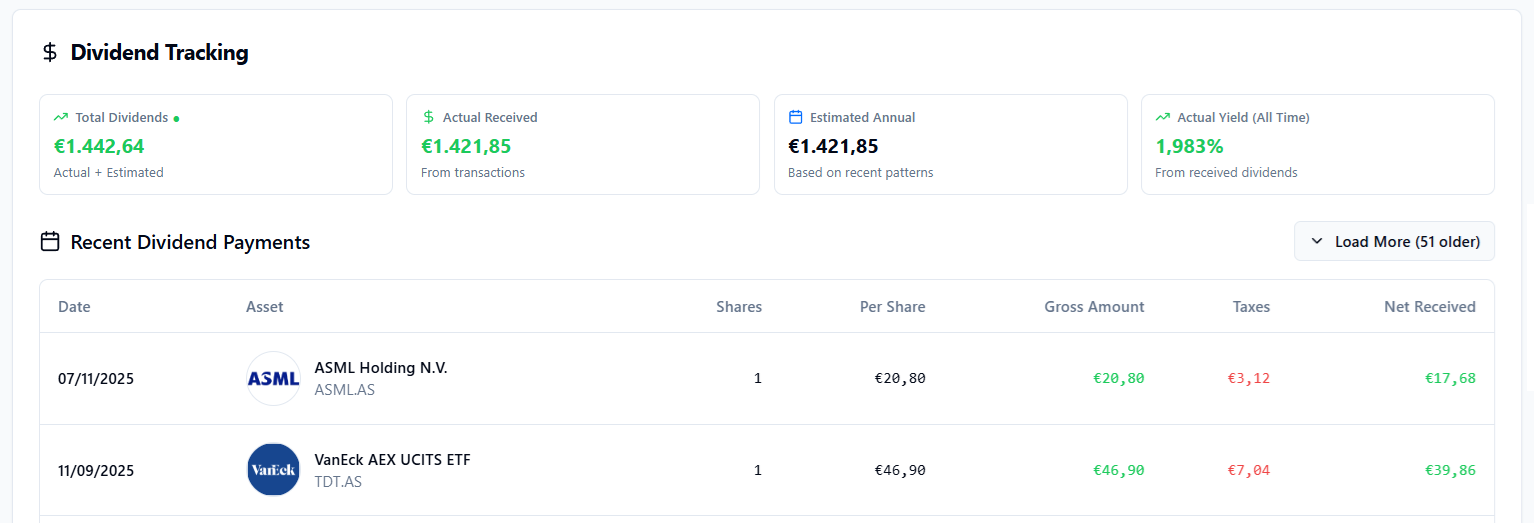
The Overlooked Role of Dividend Tracking
While dividends are powerful, their benefits can only be fully realized through systematic tracking. Unfortunately, many investors underestimate this aspect.
Accurate dividend tracking is essential for:
1. Understanding Total Return
Ignoring dividends results in an incomplete performance picture. Tracking them reveals the true value generated by each investment—not just price changes.
2. Tax Reporting and Compliance
Tax treatment varies by region and dividend type (qualified vs. non-qualified). Investors may also face foreign withholding taxes on international holdings. Proper tracking prevents errors, penalties, and overpayment.
3. Evaluating Reinvestment Benefits
Tracking reinvested dividends shows how share counts increase over time, helping investors visualize compounding in action.
4. Supporting Better Portfolio Decisions
A clear record of dividend income helps investors:
Assess which holdings contribute most to growth
Identify underperforming assets
Rebalance portfolios with greater confidence
Digital platforms simplify the process by automating dividend records, categorizing income, and presenting insights clearly.
Managing Risk in Dividend Strategies
While dividend investing offers stability, it is not risk-free. Several challenges require attention:
Dividend Cuts
During economic stress, companies may reduce or suspend dividends to preserve cash. Diversification through ETFs or across industries reduces this risk.
Sector Concentration
Some dividend-heavy sectors—like utilities or financials—may react differently to interest rate changes or economic cycles.
Interest Rate Sensitivity
Dividend stocks can behave like bond substitutes, becoming less attractive when interest rates rise.
Overvalued High-Yield Stocks
Extremely high yields may indicate a falling stock price or unsustainable payout.
Remaining disciplined, diversified, and aware of company fundamentals helps mitigate these risks.
Bringing It All Together: A Smarter Approach to Dividend Investing
Dividends are far more than periodic cash payments. They represent stability during market declines, a source of consistent income, and a profound accelerant of wealth when reinvested. Whether achieved through individual stocks or diversified ETFs, dividend strategies offer tools for investors to:
Strengthen portfolio resilience
Generate steady cash flow
Capture the long-term power of compounding
Enhance total returns across market cycles
Choosing between dividend stocks and dividend ETFs is not a question of which is better—but which best aligns with your needs. Many investors find success combining both: ETFs for broad exposure and reduced risk, with selected individual dividend growers for added performance and control.
No matter the path, the keys to success remain the same: track dividends consistently, prioritize quality over yield, reinvest whenever possible, and maintain a long-term perspective.
Sources
Based on original articles from: